Flood restoration in Pearland
Under the IICRC’s 2026 statement, rising water from rivers or streams is a Category 3 example, and storm water is classified case by case after inspection[IICRC 2026 position statement]. Flood restoration plans start from that call.
FEMA’s guidance is to document the damage, stay away from wet electrical equipment, and take out wet drywall and insulation[FEMA]. Flood restoration in Pearland follows that order: safety, photos, removal, cleaning, drying.
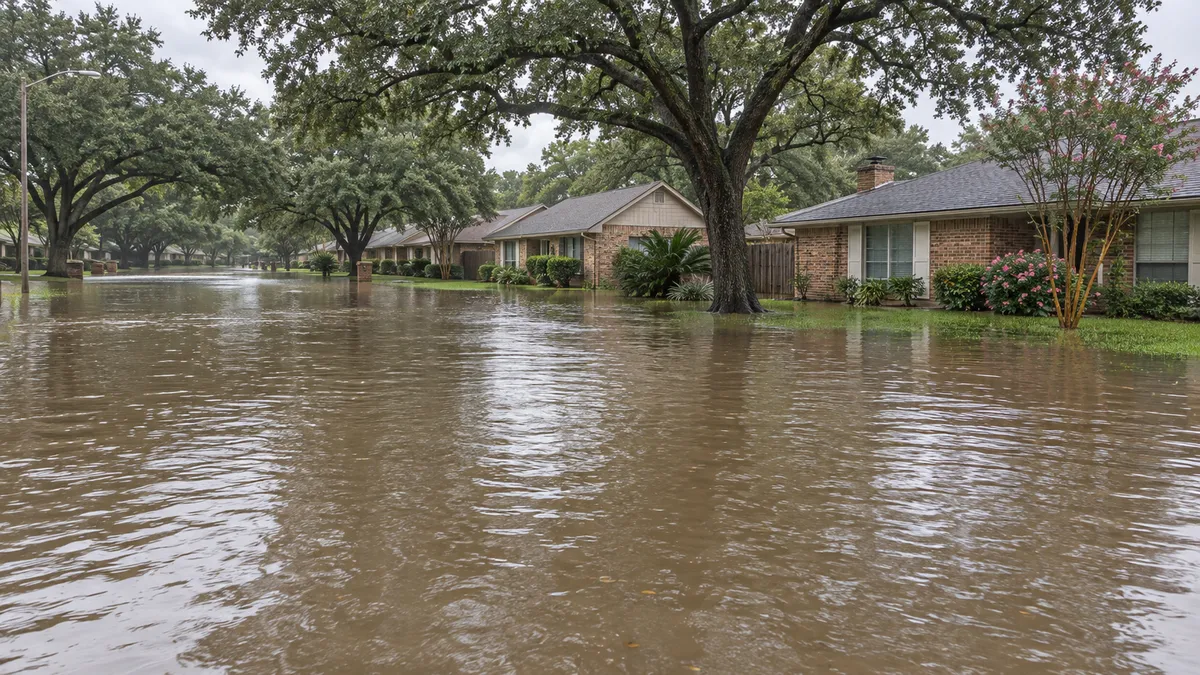
Step by step
- Wait for safe entry. Do not go back in until officials say it is safe[FEMA].
- Document. Photos and video of every room.
- Remove. Wet drywall, insulation and flooring come out.
- Clean and dry. Surfaces cleaned, then dried to verified readings.
Do
- Wear rubber boots and gloves[CDC].
- Keep children and pets out of flooded rooms.
Flood restoration and Pearland homes
During Hurricane Harvey, the National Weather Service logged 34.43 inches of rain at the 1 S Pearland/Clover Field gauge between August 25 and 31, 2017[NWS Houston/Galveston].
Any address in Pearland can be checked against the FEMA flood map[FEMA Flood Map Service Center].
More in Pearland
- Emergency water removal in Pearland
- Water extraction in Pearland
- Water mitigation in Pearland
- Water damage cleanup in Pearland
- Flood cleanup in Pearland
- Sewage cleanup in Pearland
- Burst pipe water damage in Pearland
- Crawl space water removal in Pearland
- Water damage restoration in Pearland
Flood restoration nearby
General guide: flood restoration explained.