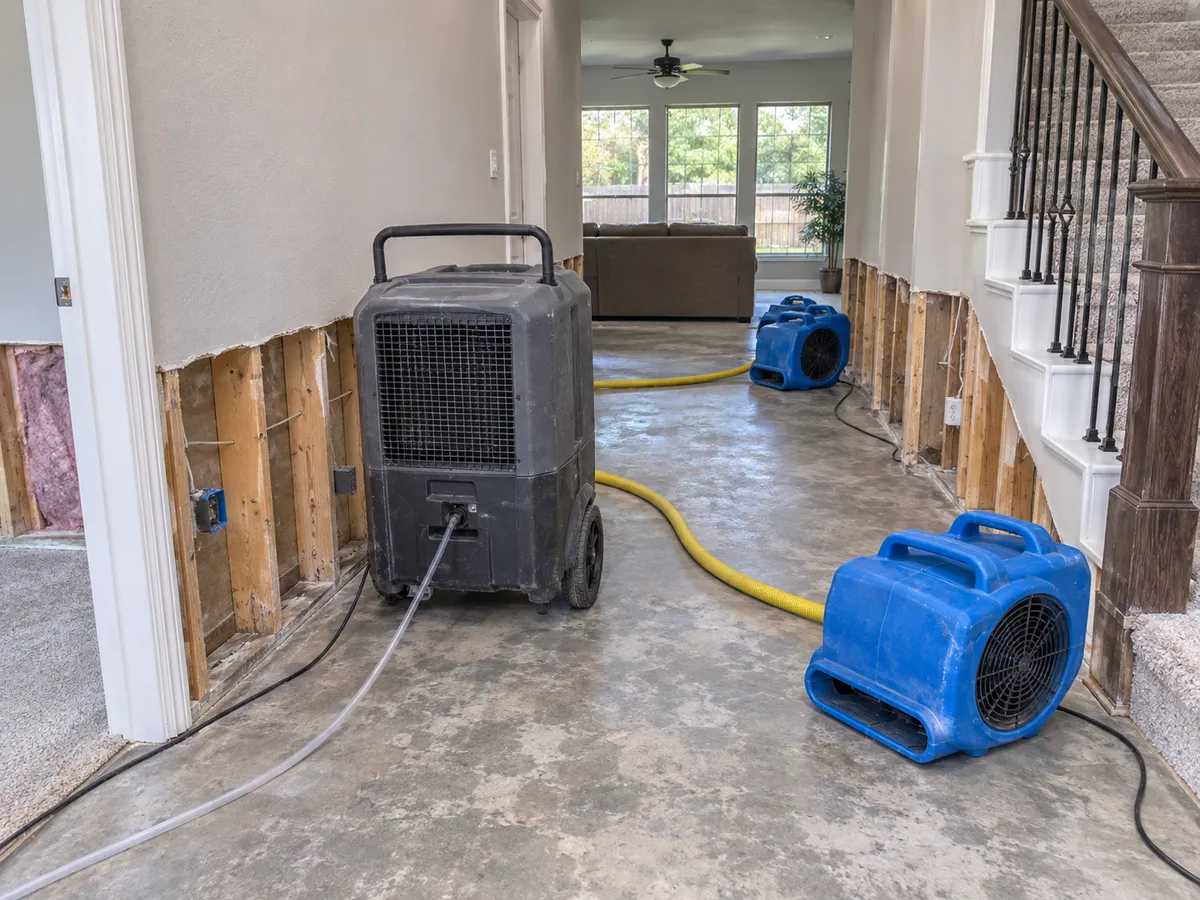
Close the main valve, keep away from wet electrical equipment, take photos[FEMA], and get drying started; the EPA puts the window at 24 to 48 hours[EPA].
Emergency water removal for Houston homes
Water damage restoration in Houston begins with water removal. Pumps handle deep water, and extraction units pull water from carpet, pad and tile so the drying equipment can do its job. On a slab foundation, water spreads under walls into nearby rooms, so crews check moisture beyond the room where the leak started.
Next is mitigation and structural drying. Materials that cannot be dried in place come out, and air movers and dehumidifiers run until readings show the structure is dry. EPA guidance is to keep indoor humidity under 60 percent[EPA], and the CDC recommends fans and dehumidifiers to help[CDC].
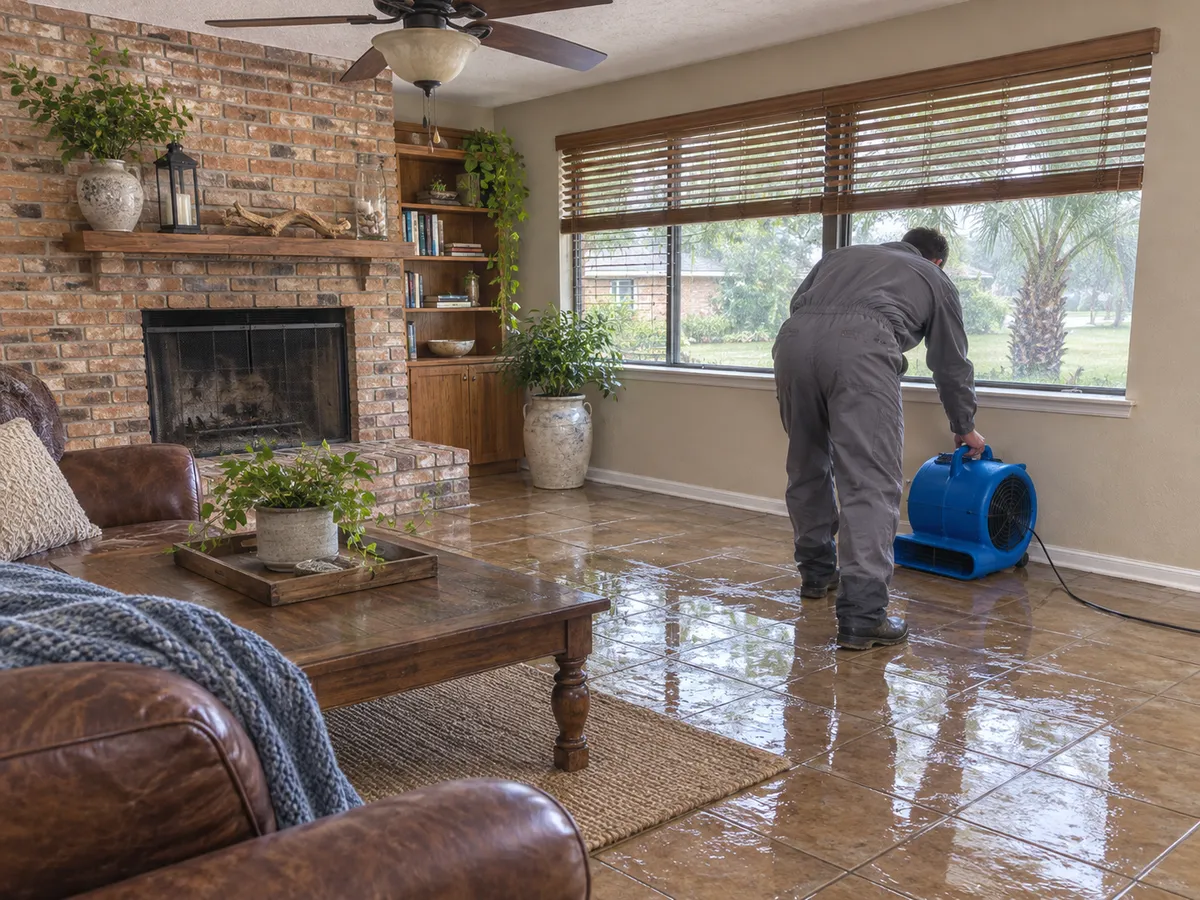
What happens after you call
- Stop the source. Close the main shut-off or the fixture valve.
- Document. Photos and video before anything moves[FEMA].
- Extract. Standing water out of floors, carpet and pad.
- Dry and verify. Equipment runs until moisture readings are normal.
Flood, sewage and pipe damage in Houston
- Emergency water removal in HoustonPumping and extraction of standing water.
- Water extraction in HoustonWater pulled from carpet, pad and hard floors.
- Water mitigation in HoustonRemoval of wet materials and controlled drying.
- Water damage cleanup in HoustonSoaked materials out, surfaces cleaned, structure dried.
- Flood restoration in HoustonRising water and storm flooding.
- Flood cleanup in HoustonMud, debris and wet materials after a flood.
- Sewage cleanup in HoustonToilet, drain and sewer line backups.
- Burst pipe water damage in HoustonSplit supply lines and frozen pipes.
- Crawl space water removal in HoustonStanding water under raised homes.
About Houston: homes, water and flooding
- 1,040,576
- housing units
- 1982
- median year built
- 42%
- owner-occupied
- 640.606 sq mi
- land area
In the city of Houston, 43% of the 1,040,576 housing units are detached single-family homes, and owners live in 42% of occupied units[U.S. Census Bureau]. Housing here skews older: 47% of homes in the city of Houston were built before 1980, and the median year built is 1982[U.S. Census Bureau]. Older supply lines, drain lines and water heaters are common sources of leaks.
Harvey’s storm total at the 1 NE Houston/Hobby Airport gauge was 37.01 inches, measured August 25 to 31, 2017[NWS Houston/Galveston]. Any address in Houston can be checked against the FEMA flood map[FEMA Flood Map Service Center]. Harris County homeowners can also use the Flood Control District’s Flood Education Mapping Tool, which shows mapped floodplains relative to homes[Harris County Flood Education Mapping Tool].
Houston Public Works takes reports of water leaks through 311 or the Houston 311 app; from outside the city, the 311 line is 713-837-0311[City of Houston 311].
Houston ZIP code pages
Nearby
Pearland, Spring and Sugar Land have their own pages. See every city on the Harris County page.