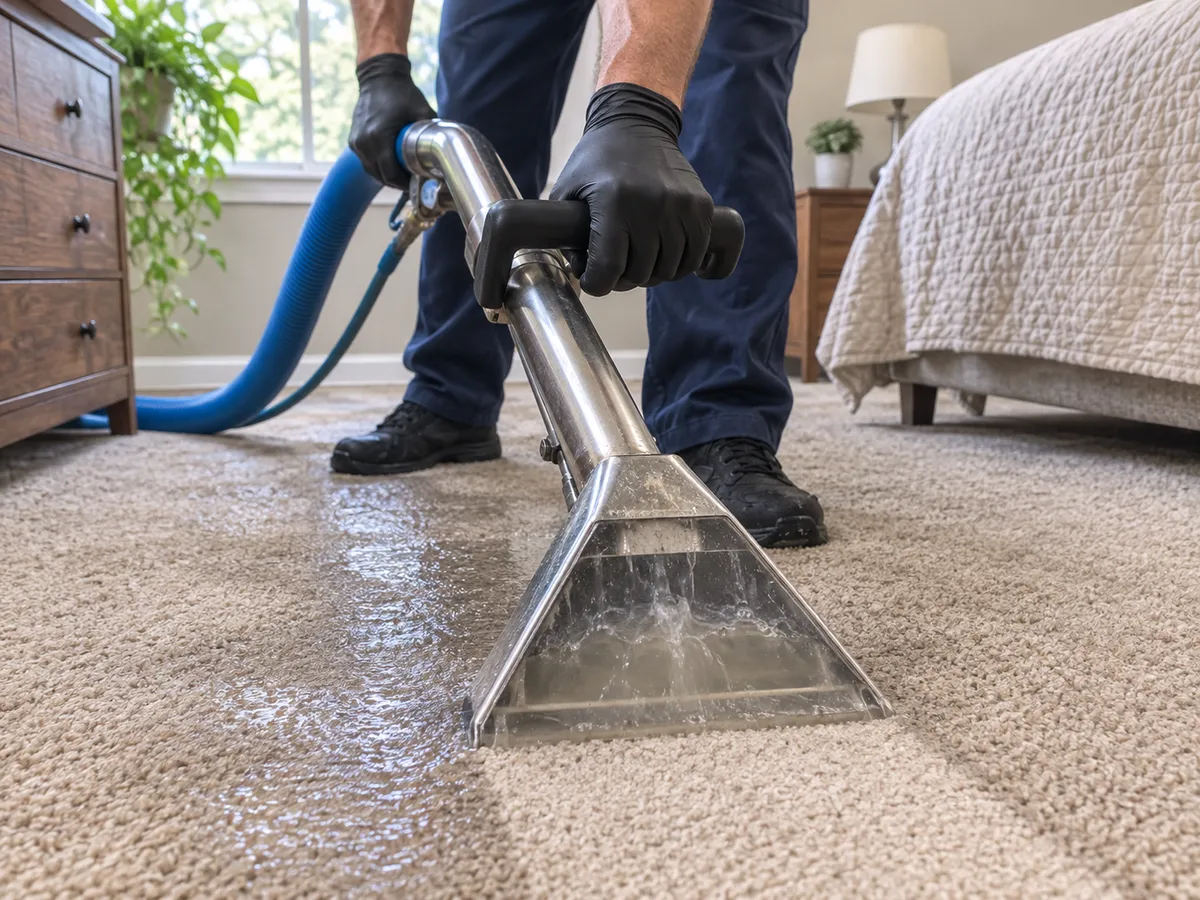
When water is standing on the floor, the clock starts. Crews doing emergency water removal in the Houston area use pumps for deep water and extraction units for carpet and pad, because the EPA advises drying wet materials within 24 to 48 hours[EPA].
Most Houston-area homes sit on a slab, so water spreads sideways under baseboards and into the next room instead of draining away. The crew works outward from the wettest area and checks walls with moisture meters, not just by touch.
Typical steps
- Stop the water. Close the main shut-off or the valve at the fixture.
- Make it safe. Turn off power to wet rooms only if you can reach the panel without standing in water[CDC].
- Pump and extract. Pumps for deep water, extraction wands for carpet and pad, squeegees for tile.
- Set drying. Air movers and dehumidifiers go in once standing water is gone.
Do
- Photograph each room before anything is moved[FEMA].
- Lift furniture onto blocks or foil to protect legs and carpet.
Avoid
- Using a household vacuum on standing water.
- Walking through water near outlets or extension cords[CDC].